About Us
What is PLSC Europe?
Following the format of PLSC in the United States, PLSC Europe is a conference for discussing work in progress. In the PLSC format, discussants, rather than authors, present and kick off a discussion on an assigned paper. There are no panels or presentations by the authors and everyone is a “participant”, offering their best questions and insights to stimulate discussion on fresh scholarship. There is no opportunity or obligation to publish connected to the conference.
Our goal is to improve and provide support for in-progress scholarship on a wide variety of issues and topics that touch upon privacy in its broadest interpretation. As such, we very much welcome submissions from different (sub)disciplines, taking alternative angles to privacy and data governance more broadly.
Just like PLSC in the United States, PLSC-Europe is a paper workshop conference. There is no opportunity or obligation to publish connected to the conference. The goal is to provide support for in-progress scholarship related to information privacy law. To do so, PLSC-Europe assembles a wide array of privacy scholars, and a number of academically engaged practitioners (from civil society or public and private sector). Scholars from non-law disciplines – including but not limited to surveillance studies, information and technology studies, critical (legal) studies, humanities, and computer science – are crucial participants in this interdisciplinary field. We follow a format in which a discussant, rather than the author, introduces and leads a discussion on a paper. There are no panels or talking heads; attendees read papers in advance and offer constructive feedback as full participants in the workshop. Having your paper accepted is NOT a requirement for attending and contributing to the conference, and indeed many attendees do not present a paper.
As a paper workshop conference, authors are free to submit a working paper (draft, in progress) for which they seek constructive feedback and suggestions for improvement/evolution. There are no formal requirements for the paper. The paper is then discussed by the discussant and audience, and authors and participants should leave the session inspired by the discussion and with insights that will help them in their own work.
The first PLSC-Europe was held in October 2015 in conjunction with the Amsterdam Privacy Conference, and the second one in May 2017, in conjunction with TILTing Perspectives 2017. Between 2017 and 2019, PLSC-Europe was held yearly, while the PLSC-Europe 2020 was cancelled due the coronavirus measures at the time.
What do we mean by “Privacy”?
The boundaries of privacy as a discipline are dynamic and contested. Although PLSC-Europe emphasizes the law of privacy, concepts from other fields play critical roles in our understanding of privacy and in shaping the law. For example, the following topics have received significant attention at previous PLSCs: fundamental rights, algorithmic governance and discrimination, police practices such as predictive policing, political/social/cultural/technical dimensions of data-intensive technologies, and privacy’s unique importance to marginalised populations, among many more.
Steering Committee
Committee Members

Kristina Irion
Kristina Irion is Associate Professor at the Institute for Information Law (IViR) at the University of Amsterdam.

Gloria Gonzalez Fuster
Prof. Dr. Gloria González Fuster is a Research Professor at the Vrije Universiteit Brussel (VUB)’s Faculty of Law and Criminology, and Director of the Law, Science, Technology and Society (LSTS) Large Research Group.

Paul de Hert
Paul De Hert is a full professor at the Vrije Universiteit Brussel (VUB), director of the Brussels Fundamental Right Research Centre (FRC) and senior member of the Law, Science, Technology and Society (LSTS) Large Research Group. At the Tilburg Institute for Law, Technology and Society (TILT, Tilburg University, the Netherlands) he serves as an associated professor.

Eleni Kosta
Prof. Dr. Eleni Kosta is full Professor of Technology Law and Human Rights at the Tilburg Institute for Law, Technology and Society (TILT, Tilburg University, the Netherlands).

Bart van der Sloot
Bart van der Sloot is an associate professor at the Tilburg Institute for Law, Technology, and Society of the University of Tilburg, Netherlands.

Jef Ausloos
Jef Ausloos is an assistant professor at the Institute for Information Law, and a research fellow at the centre for IT & IP law at the university of Leuven, and the Centre for Digital Law at Singapore Management University.

Joanna Mazur
Joanna Mazur is an Assistant Professor at the Faculty of Management at the University of Warsaw (UW), analyst at DELab UW and the Center of Antitrust and Regulatory Studies.
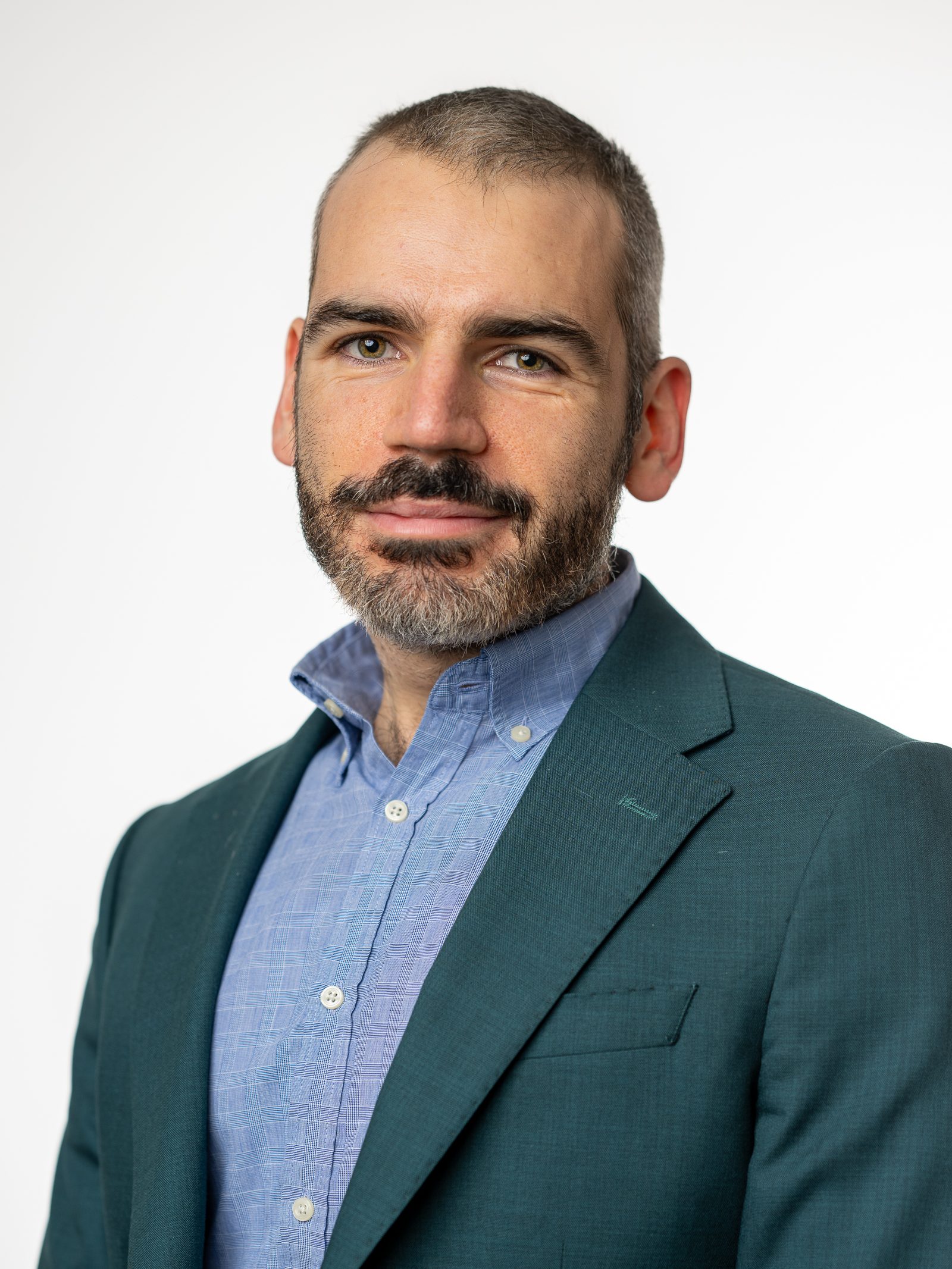
Gianclaudio Malgieri
Dr. Gianclaudio Malgieri is an Associate Professor of Law & Technology at Leiden University (the Netherlands), where he conducts research at the eLaw Center for Law and Digital Technologies.
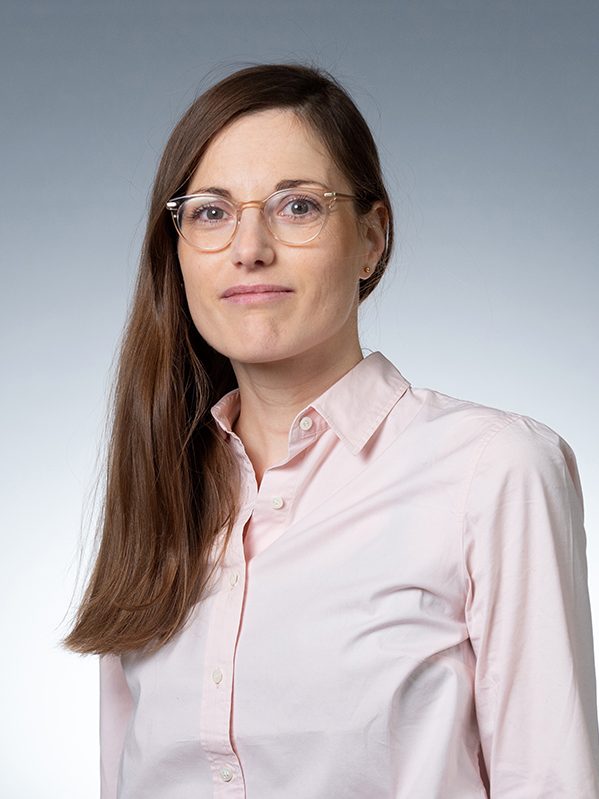
Aurelia Tamò-Larrieux
Aurelia Tamò-Larrieux is an Associate Professor at the University of Lausanne (UNIL), Faculty of Law, heading the team of Digital and Computational Law and leading the Legal Design & Code Lab.

Michael Veale
Dr Michael Veale is Associate Professor in digital rights and regulation, and Vice-Dean (Education Innovation) at the Faculty of Laws, University College London.

Stefanie Boss
Stefanie Boss is a PhD Candidate at the Institute for Information Law, the Institute for Informatics and the Data Science Centre at the University of Amsterdam.